
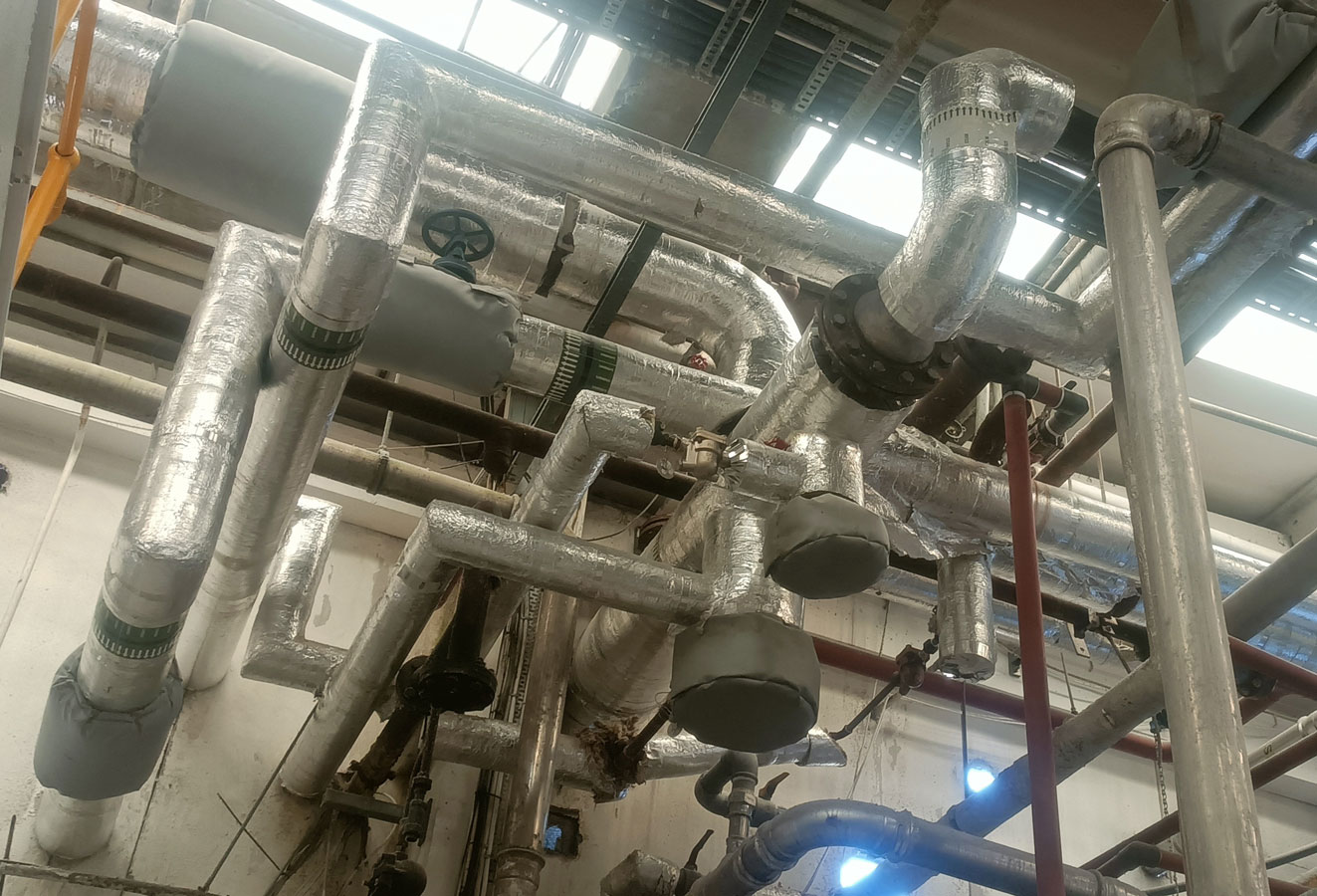
JD Robinson required independent mechanical engineering support to replace a corroded section of high-level steam pipework. Because of site access and installation constraints, the replacement arrangement was to be installed as three flanged spools rather than as a single fabricated section. The client’s insurer required a clear engineering dossier setting out the code basis, pressure calculations and inspection and testing requirements before the work could proceed.
The problem was therefore both technical and procedural. A failing steam line had to be replaced safely and practically, but the insurer also needed evidence that the proposed arrangement met an appropriate design standard, that wall thickness and pressure capability were adequate, and that fabrication and testing would be properly controlled. Without that documentation, the project risked delay and avoidable rework.
Barair established the design basis and applicable code framework for the metallic industrial pipework, then carried out the relevant pressure and structural checks. Wall-thickness verification was completed using accepted pressure design methods, with Barlow-based checks applied where appropriate. Flange and pressure capability were reviewed in the context of the intended duty, and the structural adequacy of the spool arrangement was considered with stated assumptions regarding supports and load paths.
An important part of the work was defining the inspection and test regime clearly enough for both the insurer and the fabricator. This included specifying the required welding fabrication standards, confirming qualification requirements, setting out the non-destructive testing approach, and defining the hydrostatic pressure test requirements. These elements were then brought together into a package that could be used not only for review and approval, but also as a practical guide for manufacture and installation.
The final deliverables included a design verification report suitable for insurer review, a calculation pack covering the pressure and structural checks, an inspection and test specification, declaration-of-conformity support, and guidance for final manufacturing drawing completion by the fabricator. The result was an insurer-ready engineering dossier that gave JD Robinson a clear route to fabrication and installation, with compliance evidence, inspection gates and a defined test strategy already in place.
